
Every home system comes with an expected lifespan printed somewhere in a manual or quoted by the installer, but those numbers are only averages, not deadlines. With the right maintenance habits, many roofs, water heaters, and mechanical systems can outlast their projected life by five, ten, or even twenty years. This guide walks through the most common home systems and the practical steps that help homeowners stretch their usable life, save money, and delay costly replacements.
Maximizing the Life of Your Irrigation System
Sprinkler systems are often installed and forgotten until a brown patch appears in the lawn or a valve starts leaking underground. The truth is that irrigation components wear out faster when small issues go unaddressed, since a cracked head or misaligned nozzle forces the whole system to work harder and waste water. Scheduling seasonal checkups catches these problems early, before they turn into burst pipes or water damage to your foundation.
Winterizing the system properly is one of the simplest ways to prevent premature failure, especially in colder climates where trapped water can freeze and crack pipes. Many homeowners find that calling in professional sprinkler repair once or twice a year, ideally at the start and end of the growing season, adds years to the system’s functional life.
- Flush the system each spring to clear sediment buildup
- Check for uneven spray patterns that signal clogged or broken heads
- Adjust timers seasonally to avoid overwatering
- Insulate above-ground backflow preventers before winter
Protecting Wood and Structural Elements From Wood-Destroying Insects

Termites, carpenter ants, and other wood-boring insects can shave years off the life of framing, siding, and even roof decking without any visible warning signs until the damage is extensive. Because structural wood is expensive and disruptive to replace, prevention is far cheaper than repair. Homes in humid or wooded regions are especially vulnerable, since moisture attracts the very insects that cause the most damage.
Routine inspections from a pest control provider can identify early signs of infestation, such as mud tubes, hollow-sounding wood, or discarded wings near windowsills. Catching an infestation in its early stages often means treating a localized area rather than replacing entire sections of a wall or floor joist system.
- Keep mulch and soil away from direct contact with siding
- Repair leaky faucets and gutters that create standing moisture near the foundation
- Store firewood away from the home’s exterior walls
- Schedule an annual inspection even without visible signs of pests
Keeping Pipes and Water Heaters Running Longer
A home’s plumbing system is built to last decades, but the actual lifespan depends heavily on water quality, pressure, and how quickly small leaks get addressed. Hard water accelerates corrosion in pipes and water heater tanks, while excessive pressure stresses joints and fittings over time. Simple habits, like flushing a water heater annually to remove sediment, can extend its service life well past the manufacturer’s estimate.
When a strange noise, slow drain, or discolored water shows up, it is tempting to wait and see if the problem resolves itself. In most cases it does not, and calling a licensed plumber at the first sign of trouble prevents a minor repair from becoming a full pipe replacement. Regular maintenance visits also give a professional the chance to spot corrosion or wear before it causes a leak.
- Install a pressure regulator if incoming water pressure exceeds 80 psi
- Flush the water heater tank once a year to remove sediment
- Insulate exposed pipes in unheated spaces like garages or crawl spaces
- Address small leaks immediately rather than monitoring them
Extending the Service Life of an Aging Roof

Roofs are rated for a specific number of years, but that number assumes ideal installation, ventilation, and regular upkeep, none of which happen automatically. Poor attic ventilation, for instance, traps heat and moisture that can shorten a roof’s life by a decade or more. Debris buildup, especially near valleys and flashing, holds moisture against shingles and accelerates deterioration.
A proactive homeowner has a roof inspected at least once a year, and always after a major storm, to catch damaged flashing, lifted shingles, or granule loss before it leads to leaks. Addressing these issues through timely roof repair rather than waiting for visible interior damage is the single most effective way to push a roof past its expected lifespan.
- Clear debris from valleys and around vents twice a year
- Check attic insulation and ventilation to reduce heat buildup
- Trim overhanging branches that scrape shingles or drop debris
- Address minor flashing issues before they lead to leaks
Preventing Water Damage With Proper Drainage
Gutters and downspouts do more than keep water off a walkway; they protect the foundation, siding, and roofline from prolonged moisture exposure. When gutters clog or sag, water spills over the edge and pools near the foundation, which over time can lead to cracking, settling, or basement leaks. This kind of damage is often far more expensive to fix than the gutters themselves.
A qualified gutter contractor can assess whether the current system is correctly pitched and sized for the home’s roofline, since undersized gutters overflow even when they are clean. Seasonal cleaning, ideally in spring and fall, keeps water flowing away from the home as intended and reduces strain on the fascia and soffit.
- Clean gutters at least twice a year, more often near trees
- Check downspouts extend at least three feet from the foundation
- Look for sagging sections that indicate improper pitch
- Install gutter guards to reduce debris buildup
Caring for Exterior Surfaces to Prevent Premature Wear
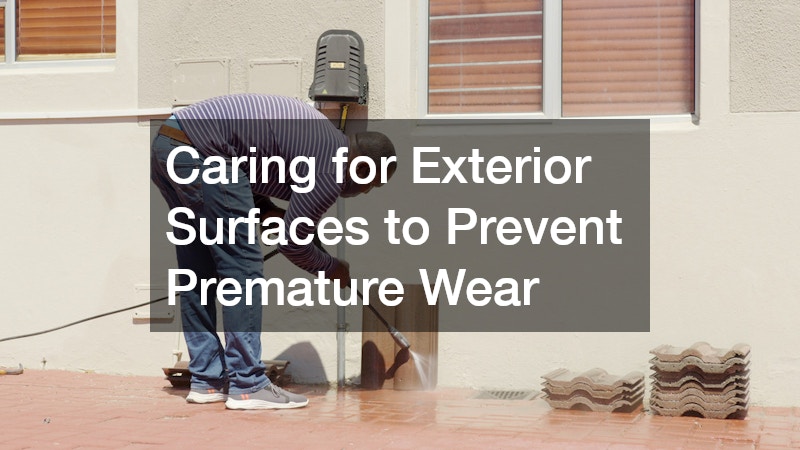
Siding, driveways, decks, and walkways all face constant exposure to sun, rain, and temperature swings, which gradually breaks down protective coatings and allows moisture to seep in. Mold, algae, and grime not only look unpleasant but can trap moisture against surfaces and accelerate deterioration. Regular cleaning removes these contaminants before they cause lasting damage.
Hiring a pressure washing company once or twice a year for driveways, siding, and decks removes buildup without the risk of damaging surfaces that comes from improper DIY techniques. Consistent cleaning also makes it easier to spot early signs of rot, cracking, or loose boards that might otherwise go unnoticed under a layer of grime.
- Clean siding annually to prevent mold and mildew buildup
- Reseal decks and wood fencing every one to two years
- Check driveways and walkways for cracks after cleaning
- Avoid high-pressure settings on delicate surfaces like stucco
Choosing Durable Materials for Repairs and Upgrades
The materials used in repairs and renovations play a major role in how long a system or structure lasts afterward. Cutting corners on materials to save money upfront often means paying for the same repair again within a few years. A roof patched with low-grade shingles, for instance, may need attention again in five years instead of the fifteen to twenty a quality product provides. Climate should factor heavily into material choices. Homes in humid regions benefit from moisture-resistant materials like treated lumber, fiber cement siding, or PVC trim, while homes in freeze-thaw climates need materials rated to withstand repeated expansion and contraction without cracking. Warranty terms are also worth scrutinizing closely, since a longer warranty often signals a manufacturer’s confidence in the product’s durability. Homeowners should compare not just the length of coverage but what it actually includes, such as labor costs or prorated replacement value. Working with a knowledgeable building material supplier helps homeowners compare options based on climate suitability, warranty terms, and long-term performance rather than just price. A good supplier can point out which brands hold up best in local conditions, flag products with a history of premature failure, and suggest slightly higher-cost alternatives that end up saving money through fewer repairs and replacements over the system’s lifetime.
This is especially important for structural repairs, siding replacement, or deck rebuilding, where the wrong material choice can undo the benefit of an otherwise well-done repair. A pressure-treated deck board rated for ground contact will outlast a standard construction-grade board by years, even though the price difference at the lumber yard looks minor at checkout. Asking about moisture resistance, UV stability, and manufacturer warranties before committing to a product pays off over the following decade. For siding, fiber cement holds up better against sun exposure and moisture than vinyl in many climates, but it costs more upfront and requires professional installation. For roofing repairs, architectural shingles rated for 130 mph winds make sense in storm-prone regions, even if standard three-tab shingles meet minimum code requirements. It also helps to check how a material performs specifically in your region’s climate, since a product that thrives in a dry climate may fail quickly in a humid one. Homeowners should ask contractors directly about expected lifespan under local conditions, not just the manufacturer’s generic rating. A ten-year warranty is only meaningful if the installer’s workmanship is also guaranteed, since improper installation voids most material warranties regardless of product quality.
- Compare warranty lengths across material brands — roofing can range from 20 years to lifetime coverage, so read the fine print on prorated payouts
- Ask about climate-specific recommendations for your region, since a siding or sealant built for dry heat may fail fast in humid or freeze-thaw climates
- Choose materials rated for your home’s exposure level, such as coastal areas needing corrosion-resistant fasteners or high-UV zones requiring UV-stabilized finishes
- Check impact and wind ratings if you’re in a storm-prone area, especially for roofing, windows, and siding
- Factor in long-term maintenance requirements, not just upfront cost — fiber cement siding costs more initially but needs less recoating than wood
- Ask contractors which materials they’ve seen fail early in local conditions, since real-world performance often differs from manufacturer claims
Refreshing Interior Finishes Without Full Renovation
Interior surfaces take a beating from daily life, humidity, and sunlight, and paint is usually the first finish to show wear. Fading, chalking, or peeling paint is not just cosmetic; it can signal underlying moisture issues, especially in bathrooms, kitchens, and basements. Addressing these problems early prevents them from spreading to drywall or trim.
Bringing in an interior painter for a refresh every five to seven years protects walls and trim while giving the home a updated look without a full renovation. Quality paint and proper surface preparation also make walls easier to clean and more resistant to moisture, which extends the life of the drywall underneath.
- Repaint high-moisture rooms more frequently than living spaces
- Address peeling or bubbling paint immediately to check for leaks
- Use mold-resistant paint in bathrooms and basements
- Clean walls before repainting to ensure proper adhesion
Extending Outdoor Living Features and Backyard Systems

Pools, decking, and outdoor lighting systems represent significant investments that require specific upkeep to reach, and exceed, their expected lifespan. Pool surfaces naturally degrade over ten to fifteen years, developing rough patches, staining, etching, or hairline cracks that affect both appearance and water chemistry. Rather than waiting for a full structural failure, many homeowners schedule pool replastering once surface wear becomes noticeable, which extends the pool’s usable life significantly and often runs several thousand dollars less than a full shell replacement. Timing matters here. A plaster surface that starts feeling gritty underfoot, showing discoloration, or losing its seal is signaling early deterioration, and addressing it at that stage prevents water from seeping into the underlying gunite and causing more expensive structural damage. Pairing replastering with an inspection of the tile line, coping, and waterline can catch related wear before it spreads. Beyond the pool shell itself, equipment like pumps, heaters, and filtration systems typically last eight to twelve years but can run longer with annual professional servicing, regular filter cleaning, and prompt attention to unusual noises or pressure changes. Outdoor lighting systems benefit from similar vigilance: replacing corroded connectors, resealing fixtures against moisture, and upgrading aging transformers can keep a decade-old system running efficiently rather than forcing a full rewiring project.
Outdoor lighting systems face their own challenges, from weather exposure to wiring degradation over time. Rain, sprinklers, and freeze-thaw cycles can corrode connections and cloud fixture lenses within just a few years if left unchecked. Well-maintained landscape lighting not only enhances curb appeal and safety but also tends to last significantly longer when fixtures are cleaned regularly and wiring connections are checked for corrosion. A simple quarterly routine—wiping down lenses, checking for loose stakes, and inspecting exposed wire for cracked insulation—can keep a system running well past its typical 10 to 15 year lifespan. Low-voltage LED fixtures, in particular, benefit from periodic voltage testing, since even minor drops caused by corroded splices can shorten bulb life and dim entire runs of lights. Applying dielectric grease to connectors and using waterproof wire nuts during any repairs helps prevent moisture intrusion before it becomes a costly failure. Homeowners should also watch for signs of transformer strain, such as flickering lights or fixtures that fail in sequence, since an aging transformer often signals it’s time for replacement before the rest of the system is affected.
- Test pool water chemistry weekly, keeping pH between 7.4–7.6 and chlorine at 1–3 ppm, to prevent surface etching and equipment corrosion
- Watch for rough spots, chalky texture, or discoloration on pool plaster, which often signal early-stage degradation before cracks appear
- Clean light fixtures and check wiring connections each season, looking for pitting, corrosion, or moisture inside housings
- Replace worn gaskets and seals around outdoor electrical components annually, since UV exposure and temperature swings break down rubber faster outdoors
- Inspect deck boards and fasteners for rot, warping, or rust, refinishing wood surfaces every 2–3 years to block moisture penetration
- Flush and winterize irrigation lines before freezing temperatures hit to avoid cracked pipes and blown fittings
Stretching a home system beyond its expected lifespan comes down to consistency, not luck, since small maintenance habits repeated over years prevent the expensive failures that catch homeowners off guard. Start by identifying which systems in your home are approaching their average lifespan and schedule a professional inspection before problems become visible. A little proactive attention now can save thousands of dollars and years of hassle down the road.