
Every homeowner eventually faces the same dilemma: something breaks, and you have to decide whether to fix it or replace it entirely. The wrong choice can drain thousands of dollars from your budget, either through unnecessary replacement costs or repeated repairs on a system that was already on its last legs. This article breaks down the true cost comparison across the most common big-ticket home systems, so you can make a decision based on facts rather than guesswork or panic. By the end, you will have a clear framework for weighing age, cost, and long-term value before you sign any contract.
Evaluating Your Air Conditioning System’s Age and Efficiency
Air conditioning units typically last between 12 and 15 years, and the decision to repair or replace often comes down to where your system falls in that lifespan. Age alone isn’t the only factor, but it’s a strong starting point for gauging how much life is realistically left in your unit and whether further investment makes sense. If your unit is under 10 years old and the repair cost is less than half the price of a new system, calling for air conditioning repair usually makes more financial sense than starting over. For example, a $400 repair on a 6-year-old unit is a reasonable investment, especially if the system has otherwise run reliably and still carries some manufacturer warranty coverage. Once a unit crosses the 12-year mark, however, efficiency losses and rising repair frequency start to erode any savings from patching it up. Older systems often use outdated refrigerants like R-22, which are being phased out and can make even minor repairs disproportionately expensive. It’s also worth checking your unit’s SEER rating against current standards; many older systems run at SEER 10-13, while new models often exceed SEER 15-16, meaning a replacement could cut cooling costs by 20-30% annually. If you’ve needed two or more repairs in the past two years, that pattern is often a stronger signal to replace than age alone.
Energy bills are often the hidden cost that homeowners overlook when weighing this decision. Older units can lose 20 to 40 percent of their original efficiency, meaning you could be paying significantly more every month just to keep the same system limping along. As a rule of thumb, most air conditioners are designed to run efficiently for 10 to 15 years, so if your unit falls outside that window, its efficiency losses are likely compounding rather than leveling off. The SEER (Seasonal Energy Efficiency Ratio) rating on your equipment offers a useful benchmark here. Units installed before 2006 often carry SEER ratings of 10 or lower, while today’s standard new systems typically start around 13 to 14 SEER and can climb into the low 20s for high-efficiency models. Upgrading from an older, low-SEER unit to a modern one can realistically cut cooling costs by 20 to 40 percent annually, which adds up quickly over a hot summer. When you factor in that AC replacement often comes with rebates, tax credits, or manufacturer warranties, the long-term math frequently favors replacement once a unit is aging and repairs become frequent. Federal tax credits for qualifying high-efficiency systems, along with utility company rebates, can offset a meaningful chunk of the upfront cost. Combine those incentives with lower monthly bills and fewer emergency repair calls, and a newer system often pays for itself faster than homeowners expect.
- Units under 10 years old with minor issues (a failed capacitor, a worn contactor) are usually worth repairing, especially if the repair costs less than $500
- Frequent breakdowns, more than two per year, signal it is time to consider replacement, since repair costs add up fast
- Refrigerant type matters, since older R-22 systems are costlier to service and R-22 is being phased out, making it scarce and expensive
- Rising utility bills despite normal usage often point to declining efficiency, particularly if bills climb 10-15% year over year
- SEER ratings offer a useful benchmark; units below SEER 13 are far less efficient than today’s SEER 16+ models
- The 50% rule is a handy guide: if repair costs exceed half the price of a new system, replacement usually makes more financial sense
Weighing Plumbing Repairs Against a Full System Overhaul
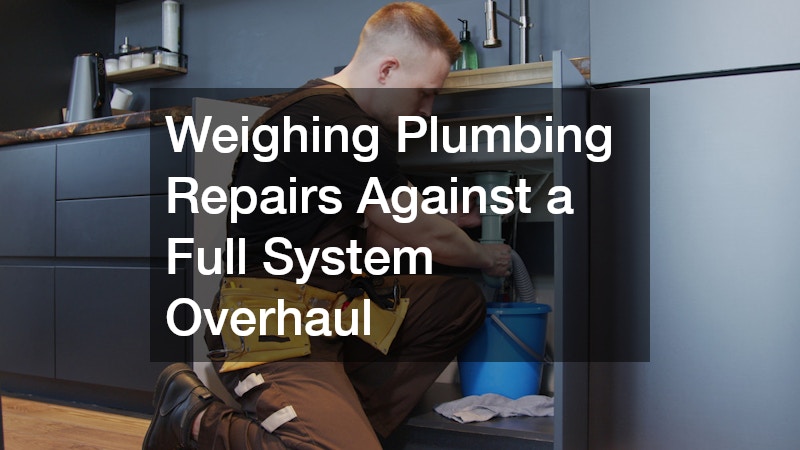
Plumbing problems range from a simple leaky faucet to a corroded main line running under your foundation, and the cost difference between these scenarios is enormous. For isolated issues like a clogged drain, a failing water heater, or a single burst pipe, hiring plumbing services for a targeted repair is almost always the more economical choice. The calculation changes dramatically when the problem is systemic, such as galvanized pipes throughout an older home that are corroding from the inside out.
Homeowners should also consider the age of their home’s plumbing infrastructure before committing to repeated repairs. Homes built before the 1980s often have pipe materials that are simply nearing the end of their usable life, and continuing to patch individual sections can cost more over five years than a full repipe would cost upfront. A licensed plumber can perform a camera inspection to determine whether you are dealing with an isolated issue or a sign of broader system failure.
- Single-fixture leaks are typically cheap and quick to repair
- Recurring leaks in multiple locations suggest aging pipe material
- Water pressure that drops home-wide can indicate corrosion buildup
- A camera inspection can reveal the true scope of the problem before you spend money
Comparing Pool Resurfacing Costs to Full Replacement
A backyard pool represents a significant investment, and when cracks, leaks, or surface damage appear, owners often assume replacement is the only option. In reality, most structural issues can be addressed through resurfacing or patch repairs performed by a qualified fiberglass pool company, especially if the shell itself remains sound. Surface gel coat damage, minor cracking, and fading color are cosmetic problems that rarely justify tearing out an entire pool.
The real question is whether the underlying structure has been compromised. If you notice shifting, significant water loss that cannot be traced to evaporation, or structural cracks that reappear after previous repairs, the shell may have failed beyond a reasonable repair. Consulting with swimming pool contractors who can assess both the surface and the structural integrity will give you a clearer picture of whether resurfacing will hold up for another decade or if replacement is the smarter long-term investment.
- Cosmetic gel coat issues are usually a straightforward, affordable fix
- Persistent water loss beyond normal evaporation rates warrants a professional leak test
- Structural cracks that return after repair often signal shell failure
- Age of the pool, typically 20 plus years, can influence the repair versus replace math
Assessing Roof Damage Versus Full Roof Replacement
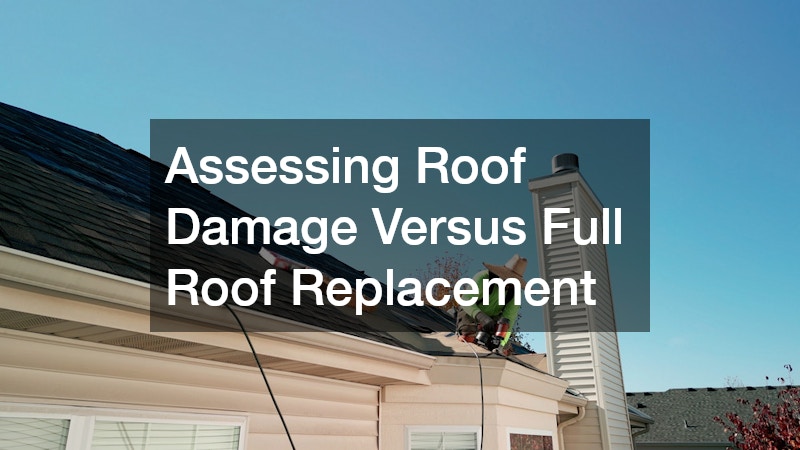
Roofing decisions are notoriously tricky because damage is not always visible from the ground, and homeowners often underestimate how much a partial fix will actually cost compared to full replacement. A qualified roofer can typically repair isolated issues such as a few missing shingles, a small area of storm damage, or a minor flashing leak for a few hundred to a couple thousand dollars. The tipping point comes when damage is spread across multiple sections of the roof or when the roofing material itself is near the end of its rated lifespan.
Asphalt shingle roofs generally last 20 to 25 years, and once you are within five years of that mark, repeated repairs start to lose their value. Insurance claims can also affect this decision, since storm damage that qualifies for full coverage may make replacement more affordable than expected. Getting a written estimate that separates repair costs from replacement costs allows you to compare the true price difference rather than guessing.
- Isolated shingle damage under a few hundred square feet is usually repairable
- Roofs older than 20 years are approaching the end of their expected lifespan
- Multiple leaks in different rooms suggest widespread underlying damage
- Insurance coverage can significantly change the cost equation after storm damage
Handling Storm-Damaged or Diseased Trees on Your Property
Large trees add value and shade to a property, but storm damage, root rot, or disease can turn them into a liability fairly quickly. In many cases, a certified arborist can save a tree through pruning, cabling, or treating the root system, which is far less expensive than full removal. However, once a tree shows signs of significant internal decay or has lost more than a third of its canopy, professional tree removal services are usually the safer and more cost-effective route.
The cost comparison here is not just about the tree itself but about the risk it poses to your home and family. A leaning tree near a house or power line can cause tens of thousands of dollars in damage if it falls, which makes removal a form of insurance rather than an expense. Getting a second opinion from a licensed arborist before committing to removal ensures you are not cutting down a tree that could have been saved with a modest repair.
- Minor storm damage to branches can often be pruned rather than removed entirely
- Trees with extensive trunk decay are structurally unstable and higher risk
- Proximity to structures or power lines raises the cost of inaction
- A second opinion from an arborist can prevent unnecessary removal costs
Determining Whether Water Damage Requires Repair or Rebuilding
Water intrusion from a burst pipe, roof leak, or flooding event creates a unique repair-versus-replace dilemma because the damage is often hidden inside walls, subfloors, and insulation. Calling a water damage restoration company quickly is critical, since mold growth can begin within 24 to 48 hours and dramatically increase both health risks and repair costs. For minor water events caught early, drying equipment and localized repairs are usually sufficient to restore the affected area.
The scope of damage often determines whether replacement of materials is unavoidable. Drywall, carpet padding, and insulation that have absorbed water for more than two days typically need to be replaced rather than dried, since they become breeding grounds for mold even after the visible moisture is gone. Working with a restoration company that documents the damage thoroughly also helps when filing an insurance claim, since adjusters rely on this evidence to determine coverage.
- Water exposure under 24 hours can often be dried and salvaged
- Materials soaked for more than 48 hours usually require replacement
- Hidden moisture behind walls can lead to long-term structural issues if ignored
- Detailed documentation improves the outcome of insurance claims
Deciding Between Patching Siding and Full Exterior Replacement
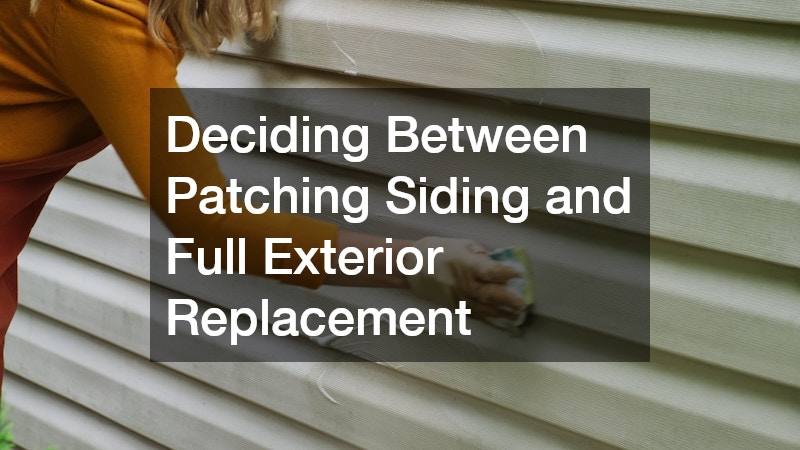
Siding protects your home’s structure from moisture and pests, so damage here should never be ignored, but it does not always require a full replacement. Cracked panels, small areas of impact damage, or a few warped boards can typically be addressed by siding companies through spot repairs that match the existing material. This is especially true if the siding is under 15 years old and the damage is limited to a small, identifiable area.
Widespread problems change the calculation considerably. If you notice warping across multiple sides of the house, moisture stains on interior walls, or siding that predates modern moisture barriers, a full replacement may actually save money over time by preventing water intrusion and energy loss. Getting quotes for both a patch repair and a full replacement allows you to compare not just upfront cost but also expected lifespan of each option.
- Small areas of impact damage are usually inexpensive to patch
- Warping or buckling across multiple walls suggests a system-wide issue
- Interior moisture stains near exterior walls can indicate siding failure
- Comparing patch and replacement quotes reveals the true long-term value
Choosing Between Garage Door Repairs and Full Replacement
Garage doors take a beating from daily use, weather, and the sheer weight of their moving parts, which makes wear and tear inevitable over time. A reputable garage door company can often resolve issues like a broken spring, a malfunctioning opener, or a bent panel without needing to replace the entire unit, especially if the damage is limited to one component. These repairs are typically fast and affordable, often costing a fraction of a new installation.
Replacement becomes the smarter choice once the door is struggling with multiple failing parts at once or when the track and frame have been damaged beyond simple adjustment. Older doors also lack modern safety features like auto-reverse sensors, which is a safety concern worth factoring into the cost comparison. Weighing the frequency of repairs against the one-time cost of a new door helps homeowners avoid throwing money at a door that is simply worn out.
- A single broken spring or sensor issue is usually a quick, low-cost repair
- Multiple simultaneous failures often indicate the door is near the end of its life
- Bent tracks or frames can be more expensive to fix than to replace
- Missing modern safety features adds hidden value to replacement decisions
Deciding between repair and replacement is rarely about a single factor, but rather a combination of age, frequency of problems, safety risk, and long-term cost. Before committing to either path, get at least two professional estimates so you can compare real numbers rather than assumptions. Keep a simple record of past repairs on any major system, since a pattern of recurring costs is often the clearest signal that replacement will save you money in the long run. Armed with this information, you can approach your next home repair decision with confidence instead of guesswork.